Free Government Tablet in Texas: 2026 Eligibility and Safe Application Options
Texas residents can check free or discounted tablet options, but the real path is not a simple state giveaway. In 2026, tablet access usually depends on Texas Lifeline self-enrollment, Lifeline-related provider offers, SNAP on the Lone Star Card, Texas Medicaid, income proof, exact ZIP code coverage, device stock, shipping rules, and local digital access resources.

Quick Answer for Texas Residents
If you live in Texas and searched for a free government tablet, start here: there is no guaranteed federal or Texas tablet giveaway for every eligible household. The safer path is to check whether you qualify for Lifeline through the Texas application process, then confirm whether any participating provider has a current tablet, phone, SIM, or discounted device offer for your exact address.
SNAP food benefits on the Lone Star Card, Texas Medicaid, SSI, Federal Public Housing Assistance, Veterans Pension, Survivors Benefit, Tribal assistance, and income eligibility can help prove that you may qualify. They do not automatically cause a tablet to be shipped to your home.
Texas is large, and that matters. A provider offer in Houston, Dallas, San Antonio, Austin, Fort Worth, or El Paso may not match what someone sees in the Panhandle, East Texas, the Rio Grande Valley, Hill Country, West Texas, the Gulf Coast, or a rural county. Device stock, tower coverage, shipping, service address rules, and the Texas Lifeline review path can all affect the result.
Best first step
Choose your eligibility path before applying: SNAP, Medicaid, SSI, housing assistance, veterans benefits, Tribal assistance, income, or another accepted program.
Best Texas check
Use the Texas Lifeline route and your exact ZIP code. Texas and Oregon use state application processes instead of the normal National Verifier path.
Best safety rule
Never share your Lone Star Card PIN, Your Texas Benefits password, bank login, gift card payment, or full account access with a tablet offer site.
What “Free Government Tablet” Means in 2026
The phrase “free government tablet” is common, but it often mixes several different things. A Texas resident is usually not applying to a federal office for a tablet. Most people are checking whether they qualify for a phone or internet service discount and whether a private provider has a device offer tied to that service.
The Affordable Connectivity Program, ACP, has ended. Households stopped receiving ACP discounts on June 1, 2024. During ACP, some providers offered a one-time device discount for a laptop, desktop computer, or tablet. That ACP tablet path is not active for new 2026 applications.
Lifeline remains active. It mainly lowers the monthly cost of phone, internet, or bundled service. Eligible households can receive a monthly service discount, and eligible households on qualifying Tribal lands may receive a higher Tribal benefit. Lifeline is not a guaranteed tablet program.
| Term | What it means | What Texas residents should know |
|---|---|---|
| ACP | A federal broadband affordability program that ended. | Do not trust sites claiming active “ACP tablet 2026” enrollment. |
| Texas Lifeline | A Lifeline discount process connected with the Public Utility Commission of Texas and the Texas Low Income Discount Administrator. | Texas residents use the state application route, not the ordinary National Verifier path used in many states. |
| Federal Lifeline benefit | A monthly service discount for eligible phone, internet, or bundled service. | It can reduce service costs, but it does not promise a tablet. |
| Provider tablet offer | A device offer from a company serving your address. | Availability can depend on ZIP code, network, stock, device condition, copay, shipping, and activation rules. |
| Local digital access | Help from libraries, device loans, digital skills programs, community agencies, or trusted local referrals. | This matters when no tablet offer is available in your part of Texas. |
Does Texas Have a Free Tablet Program?
There is no verified statewide Texas program that guarantees a free tablet to every low-income resident in 2026. “Government tablet program Texas” is a search phrase. It is not the name of one official Texas tablet giveaway.
Texas does have several programs and resources that matter for this topic. SNAP food benefits are handled by Texas Health and Human Services and are issued on the Lone Star Card. Texas Medicaid and CHIP provide health coverage for eligible low-income children, families, seniors, and people with disabilities. STAR is a Texas Medicaid managed care program for many children, pregnant women, and families. STAR+PLUS serves adults who have disabilities or are age 65 or older.
Texas is also different because Lifeline applicants are directed to the Texas state application process. The Public Utility Commission of Texas explains Lifeline bill assistance, and the Texas Lifeline self-enrollment website lets residents request, print, or complete application steps. That detail makes a Texas page different from most state pages.
For digital access beyond provider offers, the Texas Broadband Development Office and the Texas Digital Opportunity Plan focus on broadband adoption, digital skills, and barriers to access. The Texas State Library and Archives Commission supports library digital literacy resources. The Texas Technology Access Program offers assistive technology device loans, demonstrations, reuse programs, and related support for Texans with disabilities. The Texas Department of Housing and Community Affairs funds Community Services Block Grant work through local eligible entities serving very low-income Texans across all 254 counties.
Texas Lifeline
Best for residents who need lower phone or internet service costs and want to check whether a provider also has a device offer.
SNAP, Lone Star Card, and Medicaid
Best for proving eligibility when the application needs program documents or manual review.
Libraries, TTAP, 2-1-1, and CSBG agencies
Best for alternatives if no tablet offer is available in your ZIP code.
Main Ways Texas Residents May Qualify
Most Texas residents qualify through either program-based eligibility or income-based eligibility. The exact route can depend on whether you are checking Texas Lifeline, a provider service plan, or a device offer connected to a service plan.
Program-based eligibility
You may qualify if you, your child, or someone in your household participates in an accepted program such as:
- SNAP food benefits through Texas Health and Human Services
- Texas Medicaid or certain Medicaid managed care programs
- Supplemental Security Income, SSI
- Federal Public Housing Assistance, including Section 8
- Veterans Pension or Survivors Benefit
- Tribal-specific programs if they apply to your household and location
- Income-based eligibility, if your household income meets the current limit
Income-based eligibility
Federal Lifeline commonly uses household income at or below 135% of the Federal Poverty Guidelines. Texas application materials may ask for income proof if you are not qualifying through a program. Use current documents, not old pay stubs or expired notices.
Texas household examples
A parent in Houston with SNAP may use a current Texas HHSC notice or Lone Star Card-related proof. A senior in San Antonio who has Medicaid or SSI may have a strong eligibility path. A household in the Rio Grande Valley, West Texas, the Panhandle, or East Texas should check coverage closely because provider availability can change by service address. A person in shared housing, a shelter, student housing, or a multi-family home may need extra household proof if another Lifeline user lives at the same address.
Only one federal Lifeline benefit is allowed per household. A household means people who live together and share income and expenses. If people live at the same address but do not share money, they may need to prove separate household status.
EBT and SNAP Free Tablet Options in Texas
SNAP is one of the clearest eligibility paths for many Texas residents. People often search for “free tablet with EBT in Texas” or “SNAP free tablet Texas,” but the Lone Star Card itself does not give out a tablet.
Think of SNAP as proof that may help you qualify for Lifeline. After that, you still need to check whether a provider serving your exact ZIP code has a current tablet or discounted device offer. A provider can accept your eligibility and still have no tablet stock available.
Texas SNAP benefits are issued on the Lone Star Card. Keep that card safe. A real application should not ask for your Lone Star Card PIN. Your PIN is for accessing your benefits, not for proving tablet eligibility.
If you need a broader explanation of EBT-based tablet eligibility, read the main site page on tablet options with EBT.
| If you have | How it helps | What it does not do |
|---|---|---|
| Lone Star Card | May show a connection to Texas SNAP benefits. | Does not guarantee a tablet, service approval, or stock. |
| SNAP approval notice | Can support program-based eligibility if automatic checks or state review need proof. | Does not replace the provider ZIP code and coverage check. |
| Your Texas Benefits account record | May help you manage benefit notices, renewals, and case details. | Do not share your password with a provider ad, text message, or unofficial site. |
| HHSC notice or case document | Can be useful if it clearly shows your name, program, date, and current status. | An old address, missing date, wrong name, or cropped page can slow review. |
Texas application problems often come from document mismatches. If your HHSC notice has an old address, a missing date, or a different name spelling, fix the benefits record first if possible. The proof should match the person applying and the physical service address used for coverage and shipping.
Medicaid Free Tablet Options in Texas
Texas Medicaid can be a strong eligibility path, but it does not directly mail tablets to every member. Medicaid may help prove eligibility for Lifeline or a provider review. A tablet offer still depends on the company, address, stock, service plan, shipping terms, and any required copay.
Texas Health and Human Services oversees Medicaid and CHIP. STAR covers many low-income children, pregnant women, and families through managed care. STAR+PLUS serves adults with disabilities and adults age 65 or older. These program names matter because Texas residents may see them on cards, notices, plan documents, or Your Texas Benefits records.
Medicaid documents can be useful for seniors, adults with disabilities, parents, caregivers, pregnant applicants, children, and low-income adults. If the Lifeline or provider process cannot verify you automatically, you may need a current eligibility letter, benefit notice, or other official Medicaid proof.
Lifeline Tablet and Phone Options in Texas
Texas residents should pay close attention to the application path. Lifeline Support and the FCC both direct Texas residents to use the Texas state application process. That means you may see Texas Lifeline, the Public Utility Commission of Texas, the Texas Low Income Discount Administrator, or a provider-assisted route during the process.
Lifeline mainly helps lower the monthly cost of phone, internet, or bundled service. Some providers may offer a phone, SIM card, tablet, or discounted Android device with service, but the device is controlled by the provider. Texas Lifeline approval by itself does not mean every applicant receives a tablet.
How Lifeline connects to tablet offers
- You check whether your household qualifies through benefits or income.
- You follow the Texas Lifeline application path or a provider-assisted Texas process.
- You search participating companies by ZIP code or exact service address.
- The provider explains service plans, coverage, device offers, activation rules, and current stock.
- You confirm whether any tablet is free, discounted, refurbished, limited-stock, or tied to a copay.
For a safer general path, read how to apply. For service and device basics, see Lifeline phone and tablet options. Provider examples may include companies that serve some Texas areas, but availability changes by address, so compare current options on the main providers page only after checking your ZIP code.
Documents You May Need
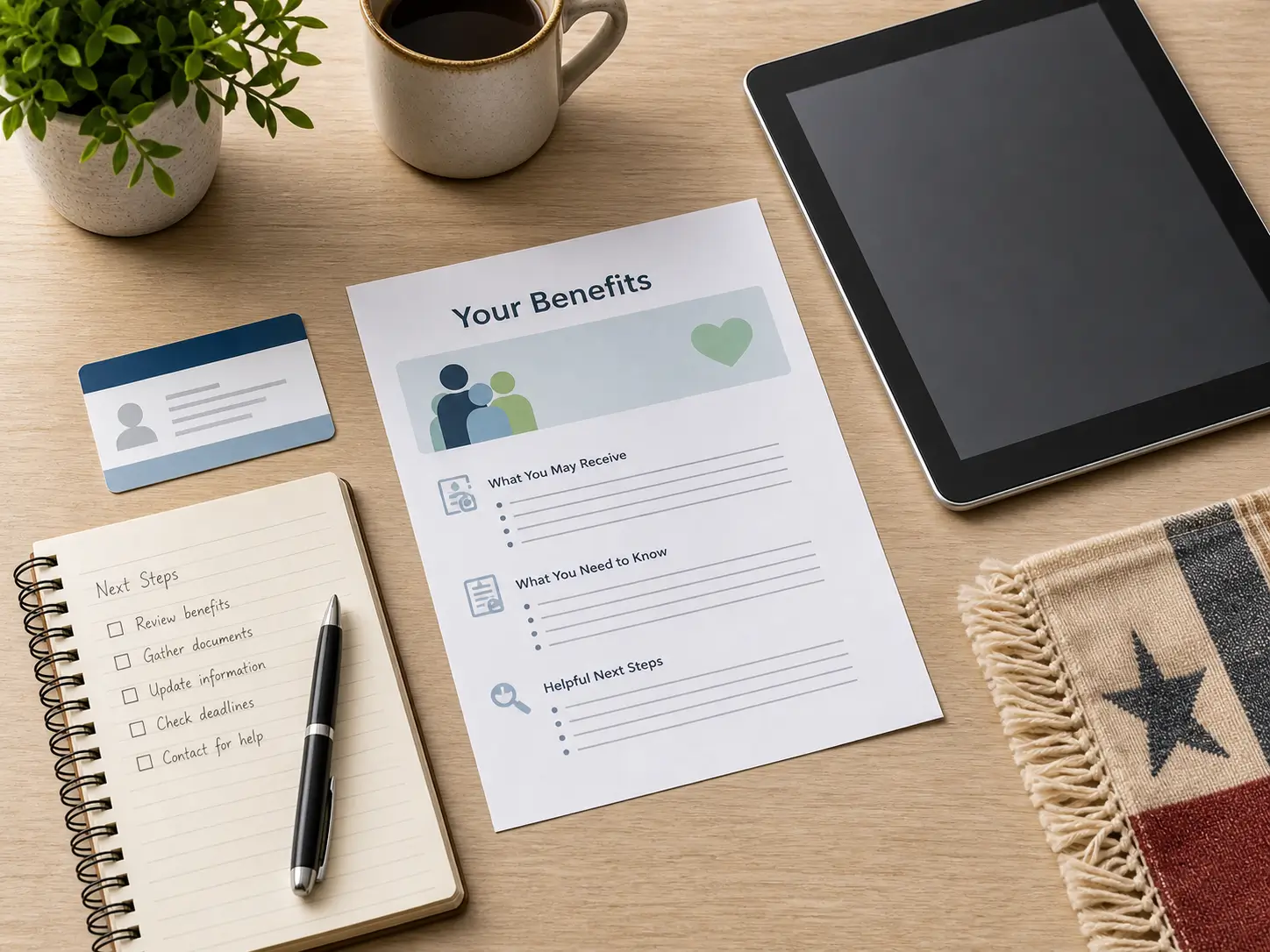
Document problems are a common reason applications get delayed. Texas applicants should prepare clear, current proof before starting. This is especially important if your SNAP, Medicaid, Your Texas Benefits, household, or physical address information recently changed.
| What you may need to prove | Common examples | Texas-specific mistake to avoid |
|---|---|---|
| Identity | Texas driver license, Texas ID, passport, birth certificate, military ID, or another accepted identity document. | Uploading a blurry photo where your name or date of birth cannot be read. |
| SNAP eligibility | SNAP approval notice, HHSC notice, Your Texas Benefits record, or current proof tied to your Lone Star Card. | Uploading only a Lone Star Card photo and sharing your PIN. Never share your PIN. |
| Medicaid eligibility | Texas Medicaid approval notice, STAR or STAR+PLUS-related eligibility proof, HHSC notice, or Your Texas Benefits proof. | Using only a managed care card if it does not clearly show current Medicaid eligibility. |
| Income | Pay stubs, tax return, unemployment statement, Social Security statement, pension statement, or other accepted proof. | Sending only one partial document when the application asks for a full income period. |
| Address | Utility bill, lease, benefit notice, shelter letter, school document, or another accepted address document. | Using a mailing address only when the provider needs a physical Texas service address. |
| Household status | Household Worksheet or similar proof if another Lifeline applicant lives at the same address. | Assuming every adult in one apartment, shelter, or shared home can receive a separate benefit without proof. |
| Tribal eligibility | Official proof of qualifying Tribal program participation or qualifying Tribal land status if applicable. | Claiming Tribal eligibility when the program or land status does not apply to your household. |
For a full document breakdown, see the main site page on government tablet documents.
Step-by-Step Application Path
Use this practical path if you are checking free or discounted tablet options in Texas. It keeps the process safer and reduces the chance of uploading documents to the wrong place.
1. Pick your eligibility path
Use SNAP, Medicaid, SSI, income, housing assistance, veterans benefits, Tribal assistance, or another accepted path.
2. Gather documents first
Prepare proof of identity, eligibility, address, and household status. Save a current Your Texas Benefits or HHSC notice if you recently applied or renewed benefits.
3. Use the Texas Lifeline path
Texas residents are directed to the state application process. Use official Texas Lifeline, PUC, or provider-assisted routes rather than random ads.
4. Watch for document requests
If the application is pending, read the request carefully. Upload the exact proof requested, not extra unrelated documents.
5. Search providers by ZIP code
Compare companies for your exact Texas address. Dallas, Houston, Austin, San Antonio, El Paso, Lubbock, rural towns, border areas, and coastal communities can show different results.
6. Confirm tablet terms
Ask whether a tablet is actually available, whether it is new or refurbished, what type of device may ship, and whether there is any copay, shipping fee, activation step, or usage rule.
Provider Availability and ZIP Code Checks
Texas is not one simple coverage area. Provider availability can look different in Dallas-Fort Worth, Houston, San Antonio, Austin, El Paso, Corpus Christi, Lubbock, Amarillo, the Rio Grande Valley, East Texas, West Texas, the Panhandle, Hill Country, and the Gulf Coast.
ZIP code checks matter because wireless signal, broadband availability, shipping rules, service address checks, provider enrollment areas, and device stock can vary. A company that works well in a Houston suburb may not be the best choice in a West Texas ranch community. A provider visible in Dallas may not offer the same device terms near the border, on the coast, or in a rural county.
| What to check | Why it matters in Texas | Question to ask |
|---|---|---|
| Exact service address | Rural routes, apartments, shelters, border communities, and oilfield or ranch addresses may show different service results. | Do you provide Lifeline service at my exact Texas address? |
| Network quality | Coverage can differ between metro areas, highways, ranch land, coastal towns, the Panhandle, and the Rio Grande Valley. | Which network does the service use where I live? |
| Tablet stock | Device inventory can change quickly and may vary by ZIP code. | Is a tablet actually available for my ZIP code today? |
| Device condition | Some devices may be refurbished, basic Android tablets, or limited-stock units. | Is the device new or refurbished, and what type of tablet may ship? |
| Total cost | Some offers may include a copay, shipping fee, activation rule, or monthly usage requirement. | What is the total amount I must pay before receiving the device? |
Use the main site page on government tablet options near you to understand why local provider checks matter. If you are comparing device expectations, read the guide to basic government Android tablet options.
What To Do If No Tablet Offer Is Available
If no provider tablet offer is available in your Texas ZIP code, do not assume you did something wrong. It may mean the provider has no device stock, no tablet promotion, no shipping option, or no service at your address.
Try Lifeline service first
A discounted phone or internet service plan may still help you make calls, receive texts, check Your Texas Benefits notices, manage Medicaid renewal forms, attend telehealth visits, apply for jobs, and stay connected while you look for a tablet.
Ask your local library
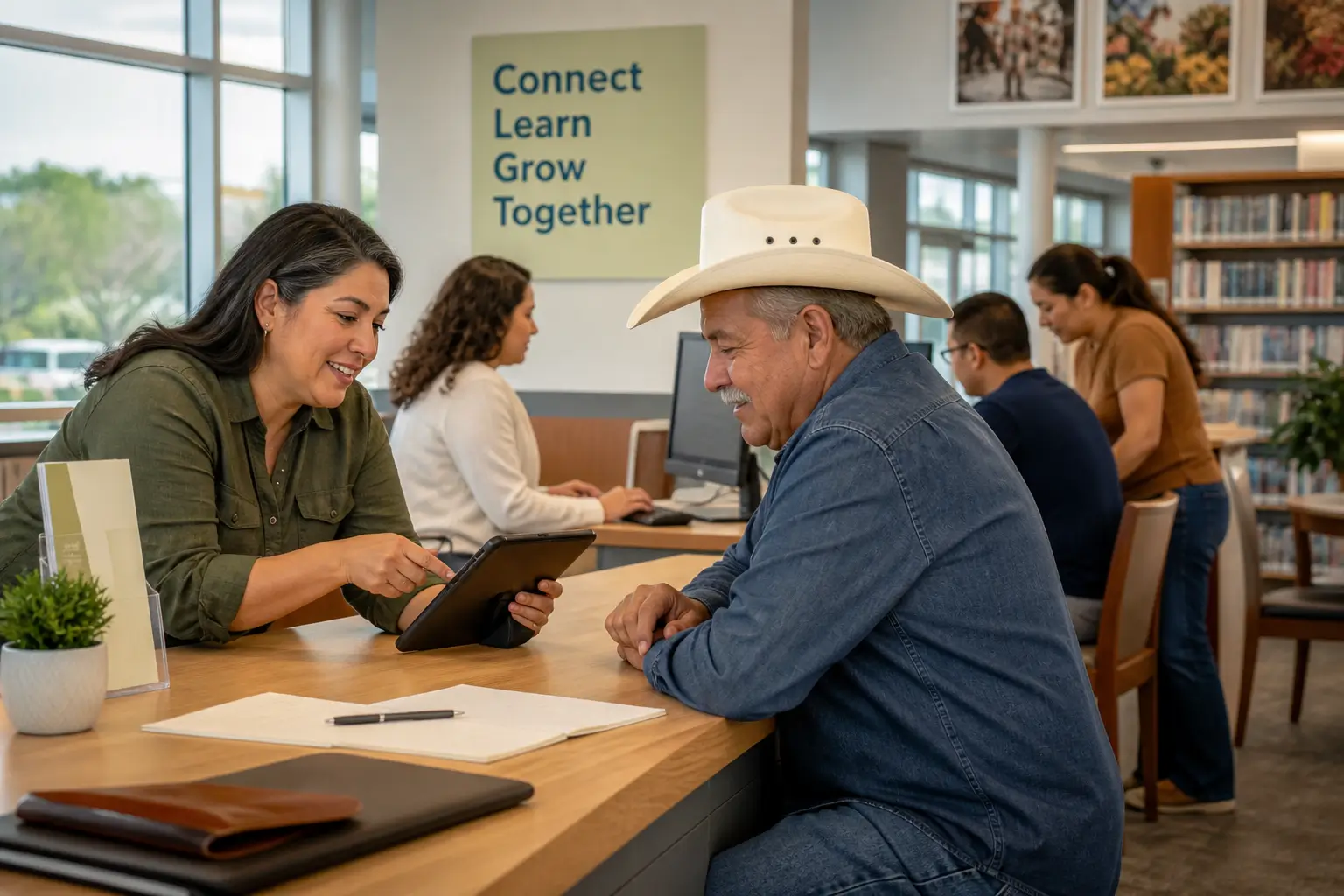
Texas public libraries often provide public computers, Wi-Fi, printing, scanning, digital literacy help, job search support, online resources, and basic technology help. Services vary by city and county, so call your branch before visiting.
Check the Texas Technology Access Program
If your device need is connected to disability, communication, vision, hearing, learning, mobility, independent living, or daily tasks, the Texas Technology Access Program may be worth checking. TTAP offers device loans, demonstrations, reuse resources, and information for assistive technology. This is not the same as a free consumer tablet, but it can help Texans test technology for real access needs.
Use 2-1-1 Texas and local Community Action resources
2-1-1 Texas can help residents find local resources for food, health, housing, utilities, benefits, and other support. Community Services Block Grant agencies and local nonprofits may not provide tablets, but they can connect very low-income residents with referrals, case support, and local programs.
Look for safe low-cost alternatives
If you need a device quickly, compare safe refurbished tablets, school or library resources, nonprofit reuse programs, and trusted local referrals. Avoid sellers or “benefit agents” who ask for gift cards, wire transfers, cryptocurrency, Lone Star Card PINs, or payment before showing clear device terms.
Special Groups in Texas
Seniors
Texas seniors may qualify through Medicaid, STAR+PLUS, SSI, SNAP, income, housing assistance, veterans benefits, or another accepted path. A tablet can help with telehealth, prescription refills, video calls, transportation apps, benefit renewals, and online banking. Seniors should confirm screen size, charger availability, support options, device condition, and whether the plan has enough data for daily use. For more senior-focused help, visit tablet options for seniors.
Veterans
Some Texas veterans may qualify through Veterans Pension, Survivors Benefit, Medicaid, SNAP, housing assistance, or income. Keep official benefit documents clear and current. If a provider asks for proof, upload only documents that show the required eligibility information. For more details, see tablet options for veterans.
Families with SNAP or EBT
Families using the Lone Star Card often need internet or a device for school portals, child care forms, benefit renewals, job searches, medical appointments, and HHSC notices. SNAP can support eligibility, but a provider must still confirm any tablet offer. Do not share your Lone Star Card PIN with anyone offering a tablet.
Medicaid households
Texas Medicaid households may include children, parents, seniors, people with disabilities, pregnant applicants, caregivers, and low-income adults. Keep current Medicaid proof ready. If your case is under review or your address recently changed, update your benefit record before starting a provider application if you can.
Rural, border, coastal, and West Texas residents
Rural Texans may face different issues than residents in Dallas, Houston, Austin, or San Antonio. Coverage, shipping, library hours, broadband quality, and local referral options can vary in the Panhandle, Rio Grande Valley, West Texas, East Texas, Hill Country, and Gulf Coast communities. Always check your exact service address, not just the county name.
Tribal households
Some Texas residents living on qualifying Tribal lands may have additional Lifeline-related eligibility paths or enhanced support. Tribal eligibility rules are specific. Use official Lifeline or Texas Lifeline resources and confirm whether the Tribal program or land status applies to your household before relying on it.
Students and adult learners
Low-income students, adult learners, GED students, community college students, job trainees, and English learners may need a device for coursework and applications. Lifeline eligibility usually depends on household benefits or income, not student status alone. Libraries, schools, workforce centers, and local agencies may have better local referrals if no provider tablet is available.
Texans with disabilities
Residents with disability-related technology needs should check both service discounts and assistive technology resources. A general tablet offer may not include accessibility support, while TTAP device loans or demonstrations may help with screen access, communication, magnification, typing, learning, or daily living needs.
Scam Warnings for Texas Residents
Public-benefits scams often target people who need help fast. Be careful with websites, text messages, social media posts, calls, or popups that make tablet approval sound automatic.
- Never share your Lone Star Card PIN. A Lifeline or tablet eligibility check does not need it.
- Do not share your Your Texas Benefits password, Medicaid portal login, banking login, or full benefit account access.
- Do not pay with gift cards, cryptocurrency, wire transfer, or payment apps to unlock a tablet.
- Do not trust ACP tablet claims for 2026. ACP ended and is not an active new tablet path.
- Check whether the company is a real Lifeline provider before uploading ID documents.
- Read the provider’s device terms before agreeing to shipping, activation, or plan rules.
- Be careful with callers or texters who claim Texas will send direct grant money or devices if you provide financial information.
Free Tablet Apply is independent and informational only. It does not issue tablets, approve Lifeline applications, represent the government, or decide provider availability. Read the site disclaimer at Free Tablet Apply Disclaimer.
Helpful Checklist Before You Apply
Use this checklist before starting a Texas Lifeline or tablet-related application.
- I understand ACP ended and households stopped receiving ACP discounts on June 1, 2024.
- I understand Lifeline mainly helps with phone or internet service.
- I understand Texas uses its own Lifeline application route.
- I have checked whether I qualify through SNAP, Medicaid, SSI, income, housing assistance, veterans benefits, Tribal assistance, or another accepted path.
- I have a clear photo or scan of my Texas ID or another accepted identity document.
- I have current SNAP, Medicaid, SSI, housing, veterans, income, or Tribal program proof if needed.
- I have saved current Your Texas Benefits or HHSC notice information if I recently applied for Texas benefits.
- I have a physical service address, not only a mailing address.
- I understand only one Lifeline benefit is allowed per household.
- I have checked providers by exact ZIP code and address.
- I have asked whether the device is new, refurbished, basic Android, or limited-stock.
- I have confirmed any copay, shipping cost, activation rule, return policy, and monthly usage requirement.
- I have not shared my Lone Star Card PIN, bank login, Your Texas Benefits password, or unnecessary personal information.
FAQs About Free Tablets in Texas
Can I get a free government tablet in Texas in 2026?
You may find a free or discounted tablet offer, but Texas does not have one guaranteed tablet program for every eligible resident. Check Texas Lifeline eligibility first, then confirm any device offer by your exact ZIP code.
Does the Lone Star Card qualify me for a tablet in Texas?
The Lone Star Card can help show that you may receive SNAP, but it does not automatically qualify you for a tablet. A provider must still confirm eligibility, service, stock, device terms, shipping, and any required copay.
Can I use my Lone Star Card as proof?
Your card may show a connection to Texas benefits, but many applications need a current approval notice or HHSC document. Never share your Lone Star Card PIN with anyone offering a tablet.
Can Texas Medicaid help me get a tablet?
Texas Medicaid can be an eligibility path for Lifeline. A tablet may be available only if a participating provider serving your address has a current device offer.
Do Texas residents use the National Verifier?
Texas residents are directed to the Texas state application process for Lifeline. You may still see USAC and Lifeline information, but the Texas route is different from the ordinary National Verifier process used in many states.
Is ACP still available for Texas tablet applications?
No. ACP ended, and households stopped receiving ACP discounts on June 1, 2024. Be careful with websites that still advertise active ACP tablet applications for 2026.
Why do tablet offers change between Houston and rural Texas?
Provider service areas, wireless coverage, shipping rules, broadband access, and device stock can vary by address. A provider available in Houston or Dallas may not offer the same option in a rural, border, coastal, or West Texas area.
Do I need a Your Texas Benefits account to apply for Lifeline?
Not always. Your Texas Benefits helps residents apply for and manage state benefits such as SNAP and Medicaid. Lifeline has its own process, but Your Texas Benefits or HHSC notices may help prove eligibility.
Can seniors in Texas qualify for tablet options?
Yes, seniors may qualify through Medicaid, STAR+PLUS, SNAP, SSI, income, housing assistance, or other accepted paths. Seniors should also check libraries, 2-1-1 Texas, local service agencies, and TTAP if disability-related technology support is needed.
Can two people at the same Texas address each get Lifeline?
Only if they are separate households under Lifeline rules. If they live together but do not share income or expenses, extra household proof may be needed.
What if my Texas benefit document has an old address?
Update your benefit record before applying if possible. Address mismatches can slow verification, especially when a provider needs a physical service address for coverage and shipping.
Who can help me locally if no tablet offer is available?
Your local library, 2-1-1 Texas, Texas Technology Access Program, Community Action agency, school, workforce center, senior center, Independent Living Center, or community nonprofit may be able to offer referrals, computer access, device help, or digital skills support.
Final Helpful Summary
A free government tablet in Texas is not guaranteed in 2026. The real path is more careful: check Texas Lifeline eligibility, use official verification steps, search providers by exact ZIP code, and confirm any tablet offer before sharing sensitive information.
If you receive SNAP through the Lone Star Card, receive Texas Medicaid, receive SSI, have housing assistance, receive veterans benefits, live on qualifying Tribal lands, or meet the income limit, you may have a strong eligibility path. If no tablet offer is available where you live, check local alternatives such as public libraries, TTAP, 2-1-1 Texas, CSBG local service providers, Texas digital opportunity resources, and safe low-cost refurbished devices.
For more help across the site, visit Free Tablet Apply, read the application steps, compare provider options, or browse more public-benefits explainers on the blog. You can also review who runs the site on the about page or ask a question through the contact page.
External Resources
Use these official or trusted resources to verify program rules before applying. External links are listed here only so the main article stays focused and easy to read.
- FCC Affordable Connectivity Program status
- FCC Lifeline consumer information
- Official Lifeline Support website
- Lifeline eligibility rules
- Texas Lifeline self-enrollment
- Public Utility Commission of Texas Lifeline assistance
- USAC Companies Near Me tool
- Texas HHS SNAP food benefits
- Texas HHS Lone Star Card information
- Your Texas Benefits
- Texas HHS Medicaid and CHIP
- Texas HHS STAR Medicaid managed care
- Texas HHS STAR+PLUS
- Texas Digital Opportunity Program
- Digital Opportunity for Texans hub
- Texas State Library digital literacy resources
- Texas Technology Access Program
- Texas TDHCA Community Services Block Grant
- 2-1-1 Texas